
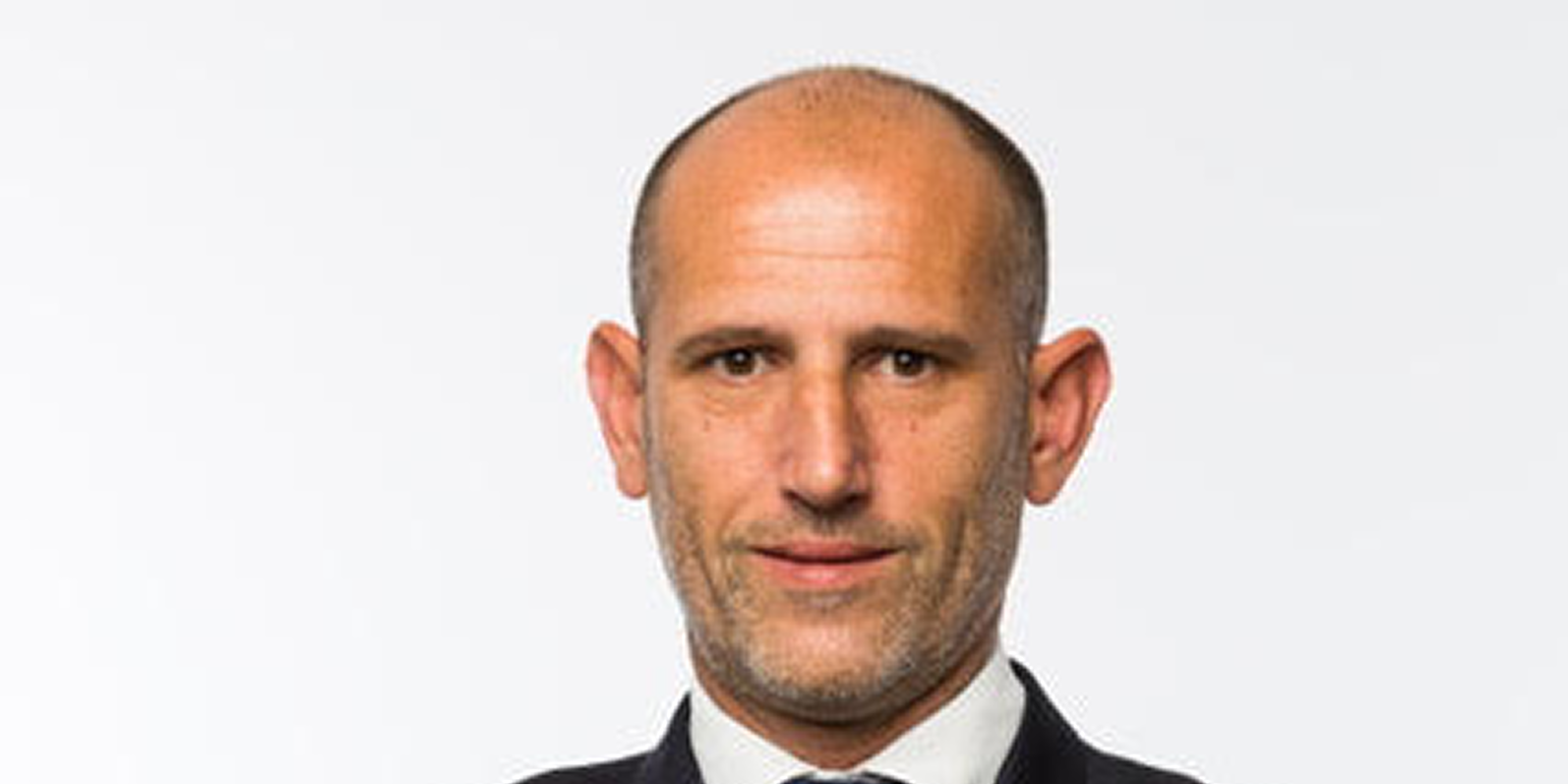
Altis Voices – Lisbon: a conversation with Pedro Carta, Partner
Lisbon is one of the most dynamic markets in Europe, but also one of those that has evolved most rapidly in recent years in terms of positioning. To better understand what is really happening — between growth, increasing selectivity and new decision-making dynamics — we asked Pedro Carta, our Partner in Lisbon, to share his perspective.
How would you describe Lisbon today as a destination for international companies looking to open an office here?
«Lisbon has evolved into a mature and credible hub for international operations. It combines a stable eurozone environment with a competitive cost base, a strong pool of multilingual talent, and a growing ecosystem of tech companies, shared services and professional firms. Prime areas remain highly sought after, with low vacancy and rising quality standards.»
What has changed the most in recent years, also in light of global instability?
«In recent years, global uncertainty has shifted occupier behaviour from rapid expansion to more selective, quality-driven decisions. Key trends include flight to quality, the normalisation of hybrid working, and resilient demand from the public sector and business services.»
What is one aspect of opening an office in Lisbon that companies tend to underestimate?
«Many organisations underestimate the time required to secure and deliver the right space. Availability of prime space is limited, competition is high, and permitting and fit-out timelines can extend schedules. Early engagement is therefore essential.»
When designing a workplace in Lisbon, which factors have the greatest impact on the project?
«Organisational needs lead the process, while space availability and costs act as constraints. Successful projects start with a clear organisational model and test it against real market conditions.»
If you had to simplify Lisbon into two main workplace scenarios, how would you describe them?
«Scenario A – Prime, experience-driven urban headquarters: located in the CBD or Parque das Nações, prioritising brand presence, ESG performance and employee experience.
Scenario B – Efficient, value-optimised hub: found in emerging areas and business parks, offering scalability and lower costs.»
How do you see the Lisbon office market evolving over the next few years?
«The market is expected to remain stable and moderately positive. New sustainable buildings will outperform, while older stock will face increasing pressure. Flexible solutions will grow, and ESG regulations will have an increasingly significant impact on decision-making.»
What makes a workplace project in Lisbon truly successful today?
«Success depends on aligning workplace strategy with company culture and hybrid working, selecting the right micro-location, prioritising ESG and experience, planning early, and integrating flexibility into both design and lease agreements.»
In this context, Lisbon remains a solid destination, but an increasingly selective one. Alongside a phase of growth, there are now signs of greater caution, linked to global uncertainty and a potential slowdown in international investment. A scenario that is leading companies towards more measured and progressive decision-making. Understanding these dynamics, and anticipating them, is what ultimately makes the difference: this is where project feasibility and quality are defined.
The budget that grows with You: why progressive budgeting changes the rules of the game
Every time a workspace project runs into trouble there is a phrase that comes up: “We didn’t expect that.” A change of supplier, a variation during demolition, a regulatory update halfway through construction. The unexpected, in fitout and workplace projects, isn’t the exception: it’s the nature of the beast. So why do so many companies still treat the budget as a fixed document, drawn up at the start and kept in a drawer until the end?

The illusion of the static estimate
In the traditional approach, the budget is often seen as an initial snapshot: a starting figure to defend until the end. The problem is that projects never stay the same. Between briefing, design development, material choices, cost planning and tendering, the project becomes clearer, sharper, sometimes different. For this reason, a static estimate can become less reliable just when the project reaches its most decisive stages. But the point is not that the initial budget is wrong. Quite the opposite. At Altis, we believe the economic direction should be set clearly from RIBA Stage 01, so the project has a solid frame from the very beginning. From that point on, that direction must be maintained with discipline, unless the Client explicitly decides to change scope, quality or ambition.
What progressive budgeting is (and how we apply it)
With progressive budgeting, we mean an approach where the budget is never “put in a drawer” but is reviewed, updated and recalibrated at every key stage of the project, as the level of definition increases.
- At the beginning, the budget is an estimate based on the brief, benchmarks and project parameters.
- During design development, every new option, every change in material or system, is immediately translated into a cost update, so it is immediately clear whether the project is drifting or staying within its economic perimeter.
- In the tendering phase, supplier quotes do not come as a surprise: they are already compared with up‑to‑date estimates, so variations and risks emerge early, not at invoice stage.
The idea is not to wait until site works to discover problems, but to build a financial picture that becomes increasingly precise, reliable and legible as the project advances.
Why the difference is methodological
This is where the difference lies. Many teams accept an initial budget but do not have the method or discipline to monitor it properly as the project evolves. As a result, they realise they are over budget too late, often only at tender stage or after, when the usual late value engineering starts. And that is exactly when the most interesting parts of the project are most at risk of being cut, instead of being protected in time.
For Altis, progressive budgeting is part of the method because it turns the budget into a promise that is verifiable step by step, not just a number at the start. Real control does not come from last‑minute correction, but from the quality of decisions made early, from the coherence between brief and design choices, and from the ability to understand the financial implications of every option before it becomes a problem.
In short: we believe in setting a clear budget from the start, and in using progressive budgeting to make sure that promise remains true until the end. That is how a project stays under control without losing quality, ambition or value.
Discover the Altis Method at altis-project.com/why-altis-about.